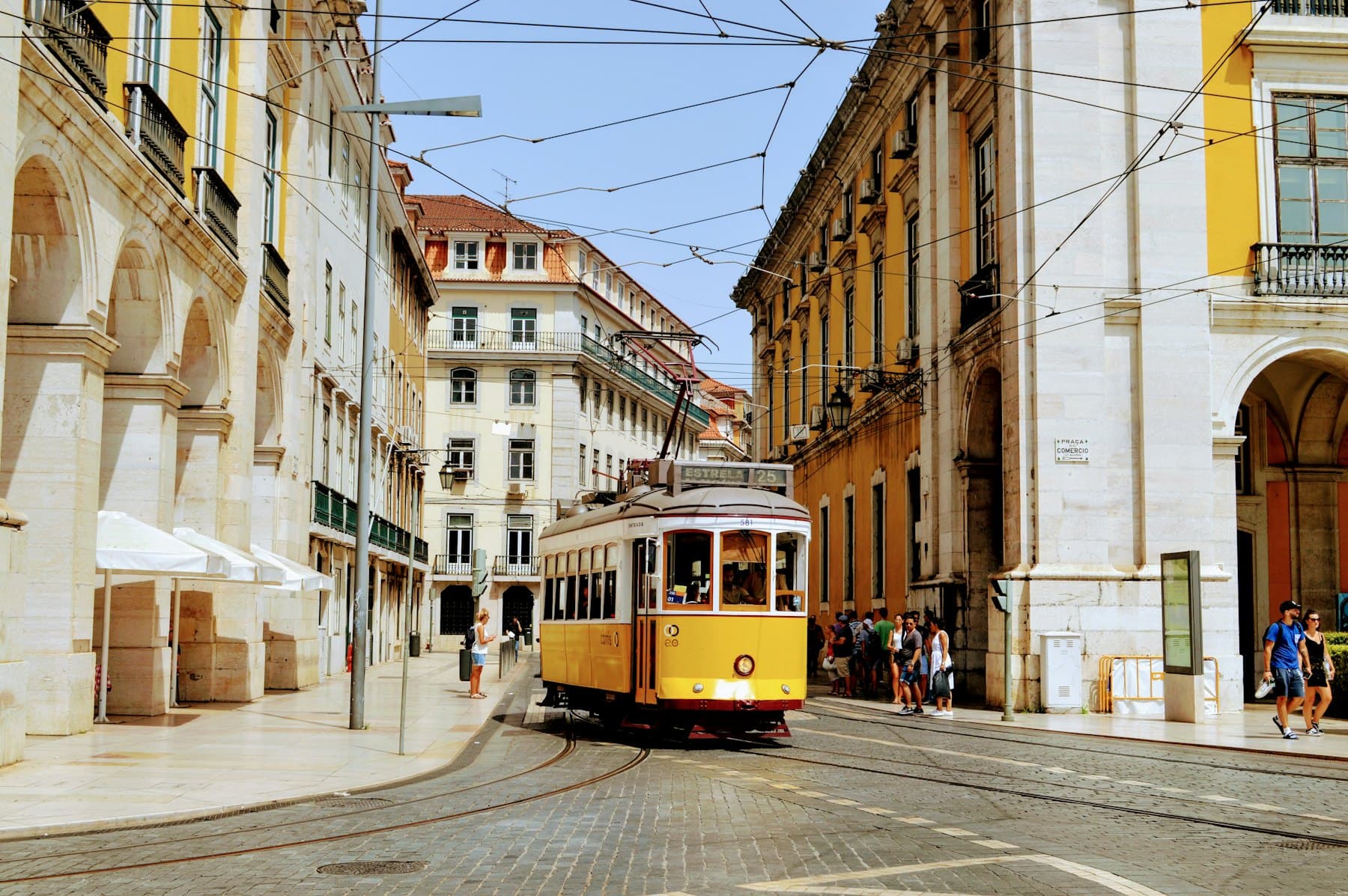
Lisbon is a city of gradients. It is built across seven hills above the Tagus estuary, and almost any route between two points involves a climb; the funiculars and the Santa Justa lift exist because the topography demanded them. The 1755 earthquake destroyed much of the lower city, and the Baixa was rebuilt on a grid to an early anti-seismic design, which is why central Lisbon feels so different from the tangled Alfama immediately uphill. Alfama survived the earthquake and remains the oldest quarter, a dense lattice of lanes best approached without a fixed plan. Tram 28 runs through it and is genuinely useful transport as well as a tourist route, though it is heavily pickpocketed in high season. Belem, a short ride west, holds the Jeronimos Monastery and the Tower of Belem, both UNESCO-listed and both busy from mid-morning onward.
When to visit
March to June and September to October. The Atlantic keeps summer bearable, but the city is busiest in July and August.